
FORL
in cats
What is FORL?
FORL stands for Feline Odonto-clastic Resorptive Lesion. Under the new nomenclature, FORL is also referred to as a resorptive lesion (RL) or tooth resorption (TR).
In this condition, the body’s own cells—known as odontoclasts—break down the hard tooth structure. The nerve supply remains intact. This means that while the teeth are broken down, the ability to feel pain remains completely intact.

One in two cats aged five or older has teeth affected by FORL—and most owners are unaware of it. The disease progresses silently, causes significant pain, and often cannot be detected without a dental X-ray. As a veterinary dentist for cats in Berlin-Neukölln, we offer the diagnostics and treatment required for FORL.
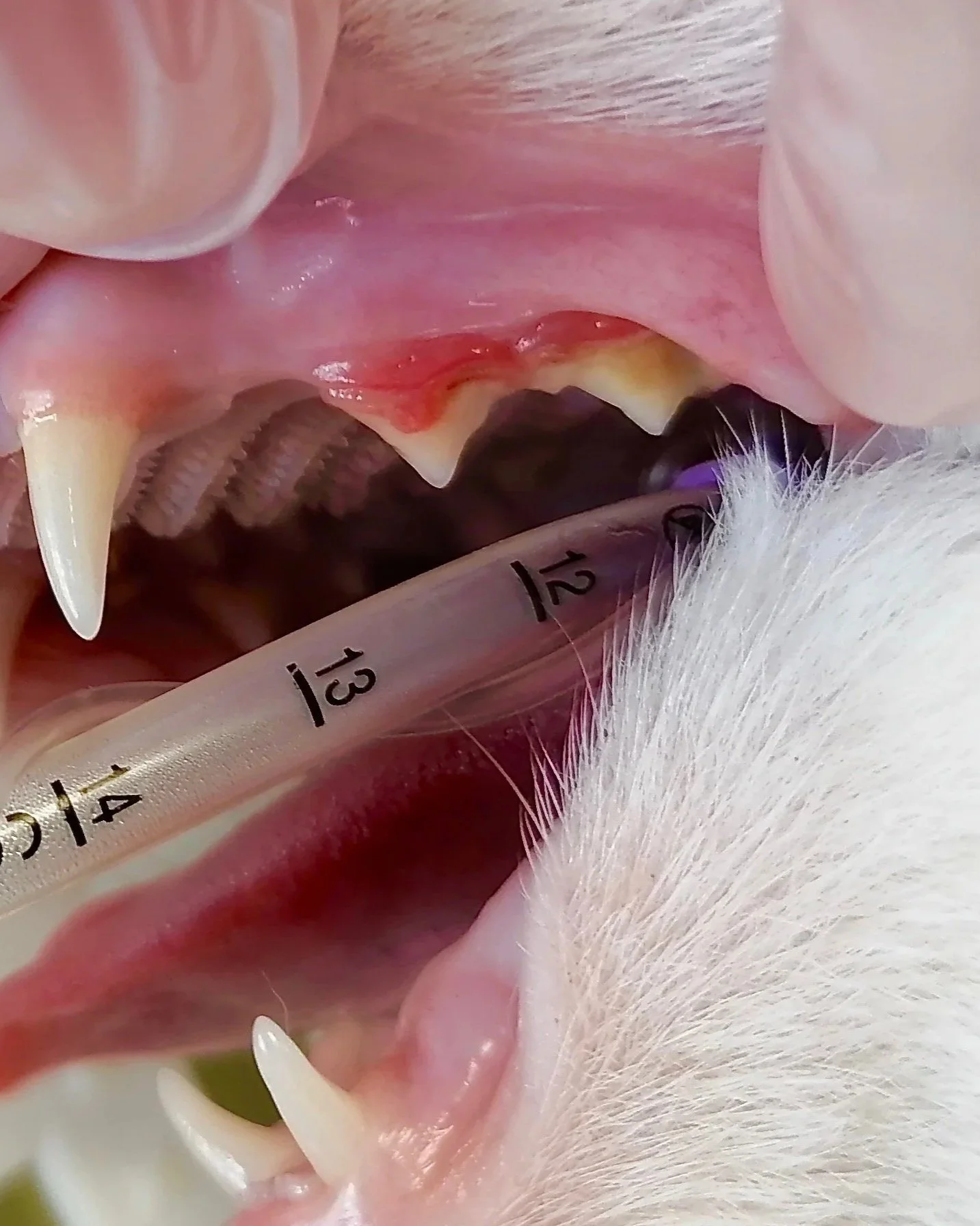
How can you tell if your cat has a toothache?
Cats rarely show signs of pain. Their survival instinct ensures that they continue to eat even when they have severe toothaches. Therefore, the fact that your cat appears to be eating normally is not proof that it is free of pain.
Watch for the following signs:
Redness of the gums
Growling or hissing while eating
Dropping food or grinding teeth
Excessive salivation or bad breath
Rubbing against the lips
Switching from dry to wet food (or vice versa)
Eating food hastily without chewing, swallowing it whole
None of these signs necessarily points to FORL on its own, but they are a clear indication that an examination is warranted.
What happens if FORL is left untreated?
Persistent toothaches take a toll on the entire body. Complications in cats with untreated FORL include, among others:
Gastritis with vomiting and/or diarrhea
Excessive grooming as a stress response (bald spots)
Behavioral changes: withdrawal, depression, or unusual aggression
An undiagnosed, untreated FORL condition means your cat will suffer permanently and to an unknown extent.
The disease often begins in the root area—that is, in the part of the teeth that is hidden beneath the gums. For this reason, it is often not visible from the outside with a simple glance into the oral cavity. Only a thorough examination of the oral cavity under anesthesia, combined with dental X-rays, reveals the full picture.
In cats affected by FORL, all teeth are usually affected. However, the disease progresses at different rates from tooth to tooth. The exact cause remains unknown to this day.
Diagnosis: Why Dental X-Rays Are Necessary
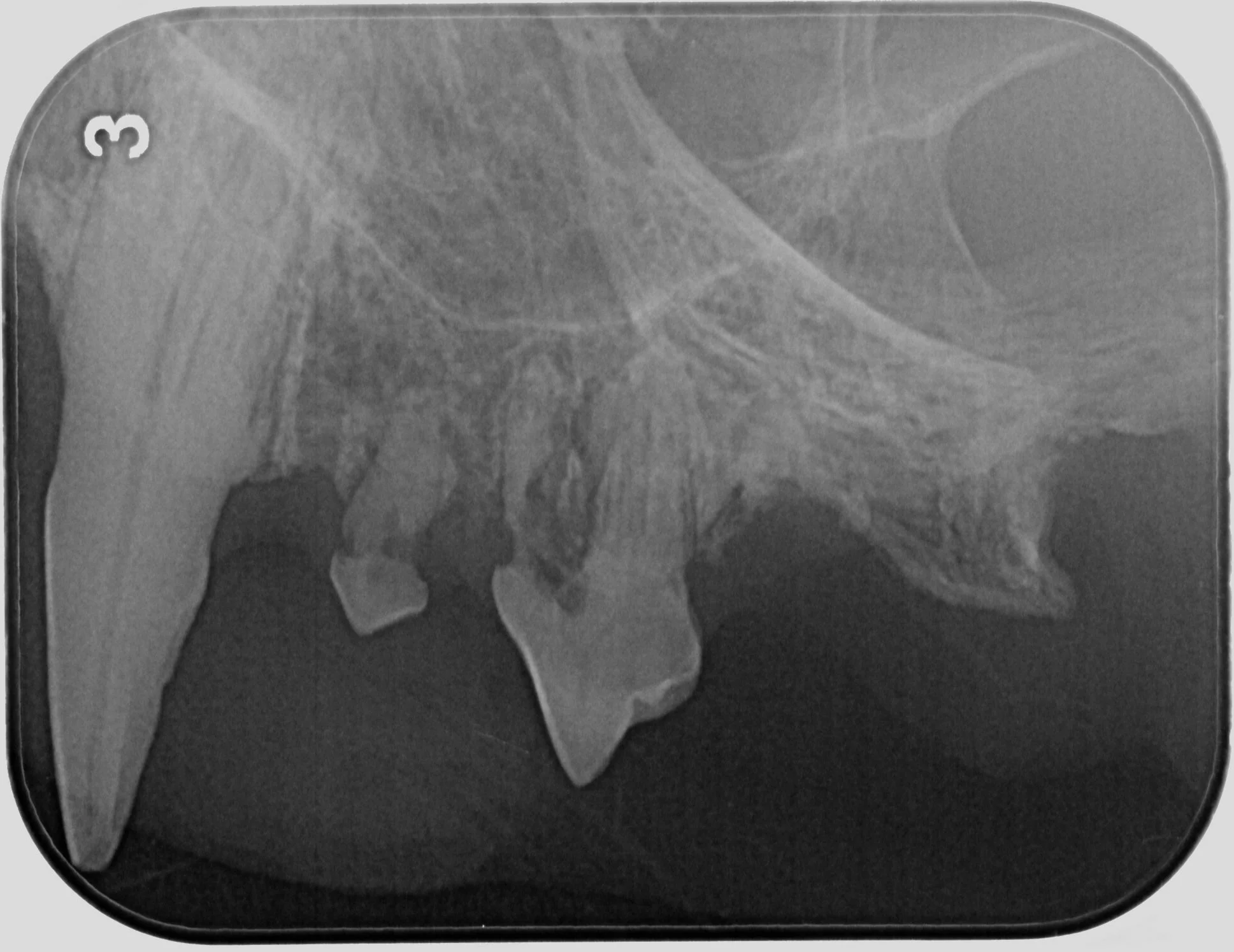
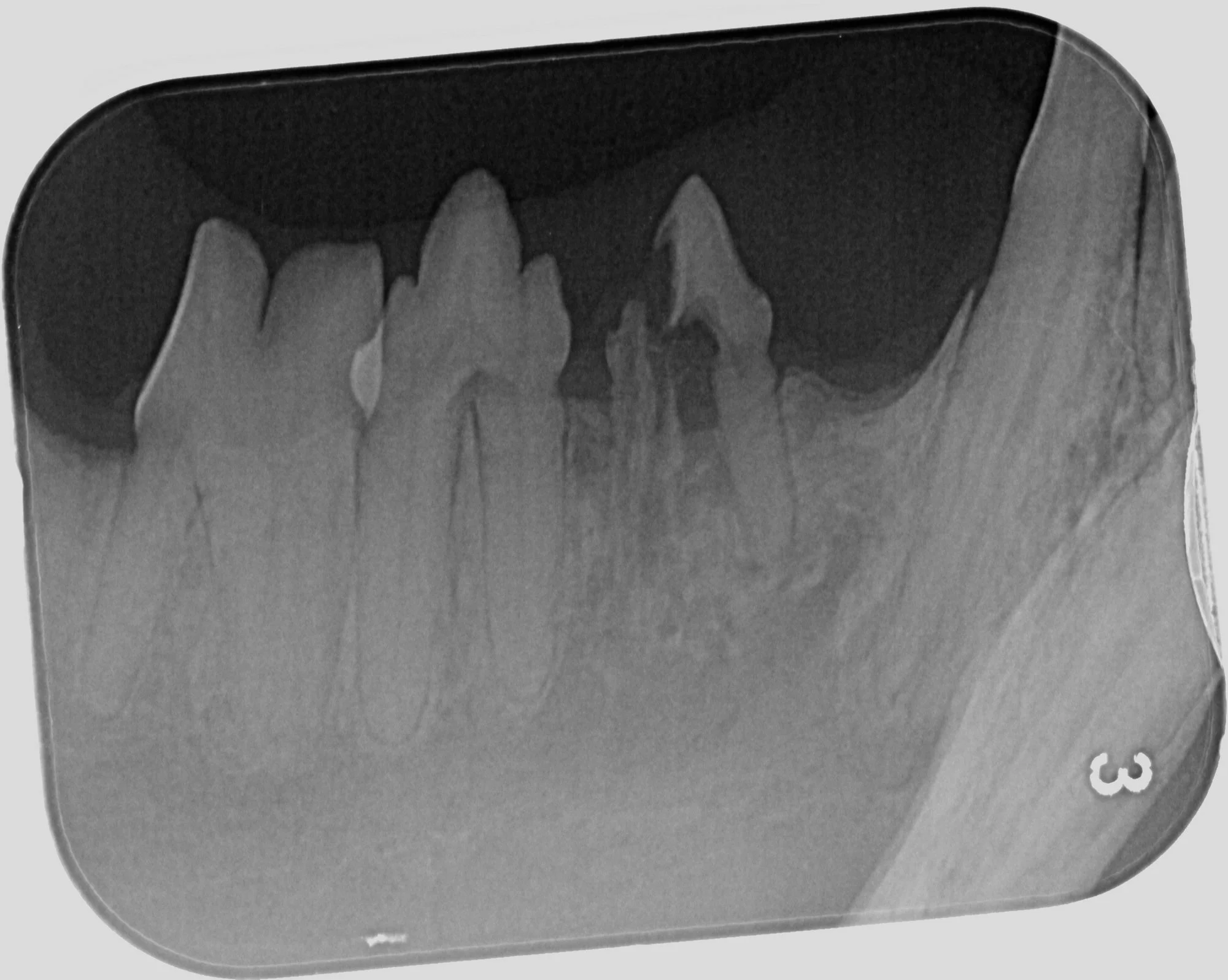
FORL in cats can only be reliably diagnosed with a dental X-ray. Changes at the junction between the crown and the root, and at the root where it meets the jawbone, are often not visible from the outside. A dental X-ray also reveals the specific type of FORL present—which is crucial for treatment.
There are two types:
Type 1 — The tooth root is still present. The periodontal ligament is intact. In this case, all root remnants must be completely removed surgically. In many cases, this requires making an incision in the jawbone. Afterward, the gum tissue over the wound is sutured closed.
Type 2 — The cat's body gradually replaces the tooth root with bone tissue. In these cases, it is not always necessary to remove the entire root—making the procedure less invasive.
We perform dental X-rays and all dental procedures exclusively under anesthesia. Depending on the findings—for example, in cases of very firmly embedded or fractured roots—the duration of anesthesia may be longer. We therefore use inhalation anesthesia, continuous monitoring, IV fluids, and heat therapy to ensure your cat’s safety throughout the entire procedure.
What happens after the treatment?
Living with fewer teeth doesn't bother cats as much as you might expect. In the advanced stages of the disease, it may be necessary to extract many—and in some cases, even all—of the animal's teeth. This will not limit your cat's ability to eat. The important thing is that your cat is no longer in pain—that is the key difference from how things were before.
Not every case of gum inflammation is FORL
Gum inflammation or tartar do not automatically mean FORL. There are other oral diseases in which the teeth can be preserved with timely treatment.
That is why we recommend:
• Young cats with gingivitis should also be brought in for a dental X-ray examination.
• Starting at age five, we recommend an X-ray exam as part of routine screening—even if your cat shows no visible signs of illness.
Do you have questions about FORL, or would you like to schedule a dental exam for your cat? Make an appointment at our practice in Berlin-Neukölln.