
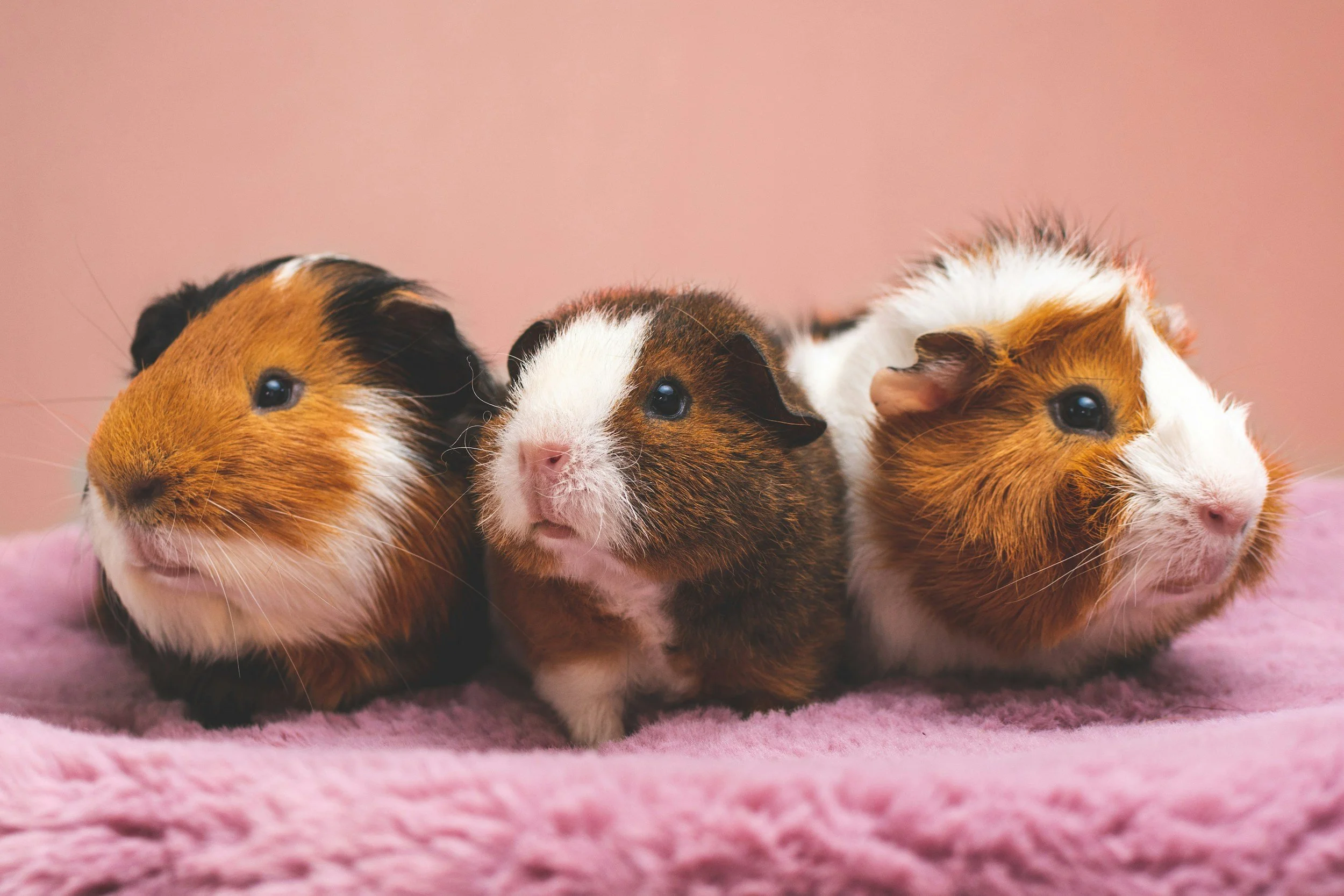
Small Mammals
Due to their unique anatomy, rabbits and guinea pigs often suffer from dental diseases in addition to digestive problems. For all types of pets, we treat internal medical conditions such as infections, heart disease, endocrine disorders, and digestive problems. We perform surgeries such as spaying and neutering, tumor removals, foreign body removals, bladder stone removals, and bone surgeries.
In a small animal practice, pets include all mammals other than dogs and cats—specifically rabbits, guinea pigs, chinchillas, degus, rats, mice, hamsters, and ferrets. However, exotic small mammals such as white-bellied hedgehogs, hedgehog tanrecs, sugar gliders, various species of gerbils (most notably the Mongolian gerbil), dwarf hamsters, prairie dogs, as well as raccoons and skunks are also featured.
All of these animals are very different, live in very different habitats, and have specific needs in terms of care, feeding, and socialization.
At the Sonnenallee Veterinary Clinic in Neukölln, we’re happy to address any issues your special pet may have. We’re happy to advise you on care and feeding and assess any health issues your little one may have.
Pets can be grouped in various ways. From a medical standpoint, it makes sense to divide them into four groups based on their diet:
Exclusively herbivorous: lagomorphs (rabbits) and guinea pig relatives (guinea pigs, chinchillas, degus)
Mainly grain-eaters: rats, mice, hamsters
Insectivores: Hedgehogs, hedgehog tanrecs
Carnivores: Mustelids (ferrets, etc.)
Nutrition shares many medical parallels, such as parasitic infections, dental anatomy, and similarities in the digestive tract. This biological relationship then helps us better understand animal groups, for example, when dealing with reproductive issues.
Please don’t hesitate to bring in exotic small animals that haven’t been mentioned here. We can draw conclusions based on our extensive experience with related species! We always treat your pet as a unique case and use the diagnostic tools at our disposal to get to the bottom of the problem!
For Pets at the Sonnenallee Veterinary Clinic
-
Dental Treatments
As a veterinary dental practice, we focus particularly on the dental health of our patients.
Rabbits, guinea pigs, chinchillas, and degus are being brought in for dental problems with increasing frequency, and dental problems also occur in other pets.
-
Cardiology
Pets can also develop heart disease. As with dogs and cats, a cardiac examination involving X-rays and echocardiography (heart ultrasound) can be performed on these animals to better assess the problem.
-
Internal Medicine
Diseases of the liver, kidneys, digestive and reproductive organs, as well as hormonal disorders and skin conditions, occur in small animals just as they do in dogs and cats. For diagnosis, we use ultrasound, X-rays, blood tests, and other laboratory diagnostic tests.
-
Surgery
In our state-of-the-art operating room, we perform various soft tissue and bone surgeries on companion animals. We place special emphasis on gentle and tailored anesthesia techniques.
-
Prevention
We recommend preventive health checkups for all pets, which—depending on the species and specific concerns—may include vaccinations, blood tests, and advice on feeding and care.
Prevention:
All pets should be taken to the veterinarian’s office for regular checkups, even if they are healthy. During a general examination, the veterinarian checks the eyes, ears, teeth, skin, and coat. The heart is auscultated and the abdomen is palpated. If necessary, blood and fecal samples are analyzed.
Vaccines are available for rabbits and ferrets.
Rabbits are vaccinated against myxomatosis, RHD1, and RHD2. These three viral diseases occur in the wild rabbit population and are transmitted through direct contact in outdoor enclosures, through mosquitoes that first feed on wild rabbits and then on pet rabbits, and through the urine of wild rabbits, which can be found, for example, on forage plants such as dandelions.
Ferrets should be vaccinated against distemper and rabies, especially if they go outside and might come into contact with other animals. There is currently no vaccine approved for ferrets, so we use a vaccine for dogs that has proven to be effective.
Cardiology
Every Wednesday afternoon, Dr. Jürgen Eichler holds a cardiology clinic at our practice. Rabbits, guinea pigs, and ferrets can also have their hearts examined here using ultrasound to obtain an accurate diagnosis of heart disease. Only with an accurate diagnosis can we prescribe the appropriate medication for the condition. Please call to schedule an appointment.
Internal Medicine for Companion Animals
At the Sonnenallee Veterinary Practice in Neukölln, we most frequently see two symptoms in herbivorous small mammals: loss of appetite and diarrhea. Unfortunately, there are more possible causes for these than just a gastrointestinal infection. Dental problems are often the cause of both symptoms (see Dental Diseases). This can lead to digestive problems, either as a result of the dental issues or for other reasons. Food plants that aren’t chewed up enough can cause an imbalance in the gut flora, which can trigger diarrhea or constipation. Ingested foreign objects—such as large seeds swallowed whole, matted fur balls, or dried pieces of fruit or vegetables that swell in the gastrointestinal tract—can also act as blockages in the intestines. As a result, feces are no longer passed, and the stomach becomes distended, leading to tympania. In most cases, these foreign objects can be moved along through intensive therapeutic management. This includes X-rays to assess the condition, intensive intravenous therapy, pain management, anti-nausea medications, and the administration of laxatives. If these measures prove ineffective and the X-rays show a worsening of the condition, surgery may be necessary to remove the foreign object.
Parasitic infections in the gastrointestinal tract—known as endoparasites—can also cause loss of appetite and diarrhea. If your pet has diarrhea, please always bring a pooled stool sample (from at least 3 separate bowel movements) so that we can test for parasitic infections in our in-house laboratory.
Another cause of loss of appetite in female animals can be problems with the reproductive tract. Inflammation and tumors can cause abdominal pain, which leads to a loss of appetite. In such cases, a diagnosis must be made quickly using X-rays or ultrasound . Surgical treatment—that is, removal of the ovaries and uterus—is the only appropriate therapeutic step here! A preliminary blood test allows us to better assess the anesthesia risk and manage anesthesia optimally. A chest X-ray—that is, X-raying the chest from at least two angles—provides clues about metastases.
Even if your small mammal frequently passes small amounts of urine or has blood in its urine, you should have the uterus examined in addition to evaluating the urinary tract . In addition to bladder infections, X-rays or ultrasounds can also detect bladder stones, ureteral stones, kidney stones, or abnormalities in the uterus. A blood test allows us to assess kidney function and detect signs of inflammation.
At the Sonnenallee Veterinary Practice, rabbits, guinea pigs, rats, and ferrets with skin problems are also frequently brought in. In addition to a dermatological examination—that is, an examination of skin lesions—a thorough general examination is also one of the first steps. Skin problems aren’t always just skin problems.
Examining the affected areas of the skin is, of course, the first step. Samples are taken for microscopic examination. These samples are tested for parasites, fungal infections, or bacterial infections. Some skin samples may also be sent to an external laboratory for further diagnostic testing.
But changes can also be detected during a general examination: In a female guinea pig with symmetrical hair loss, can you feel an enlargement in the anterior abdominal region? (→ Ovarian cysts) In a rabbit with hair loss, is the heartbeat harder to hear on one side or both sides? (→ Most likely a thymoma, a tumorous condition in the chest cavity), does a spayed female ferret with a thinning coat have a swollen vulva? (→ Hyperadrenocorticism —in ferrets, the adrenal glands can take over the production of sex hormones)